Keyless Caesar Cipher Decryption
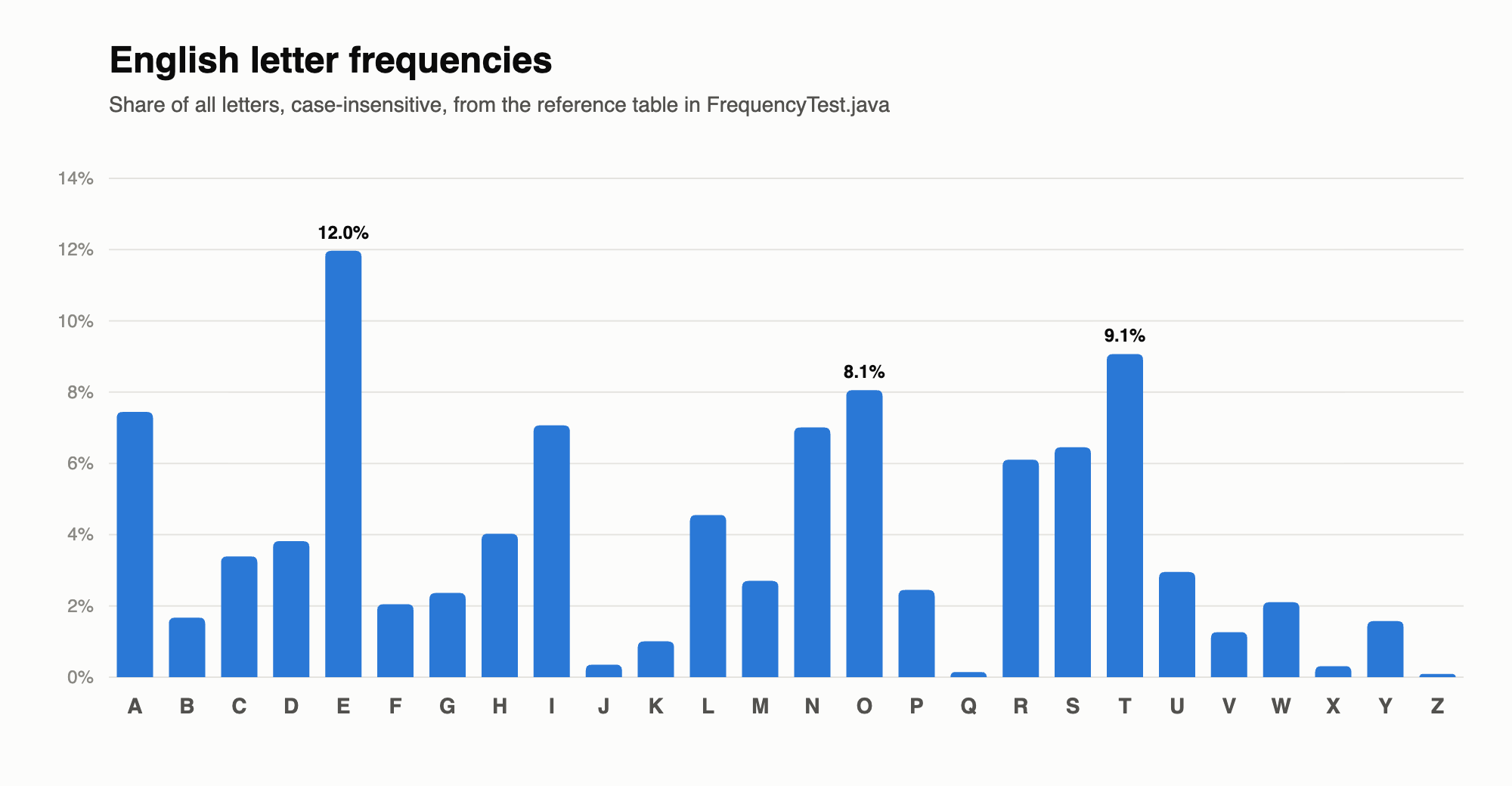
Used a character-frequency dataset to decrypt a Caesar-shifted plaintext without the key. A fun little project that seemed like magic to me at the time.
- When
- 2018
- Status
- Completed
Overview
I wrote two Java programs: one that uses a key to encrypt a message, and one that tries to decrypt it without the key. I used the most insecure encryption method ever invented, the Caesar shift, so it’s more a proof of concept and something that I enjoyed as opposed to anything novel.
 The full round trip: the opening of A Tale of Two Cities is encrypted with key 42, then recovered with no key at all. Click to enlarge.
How it works
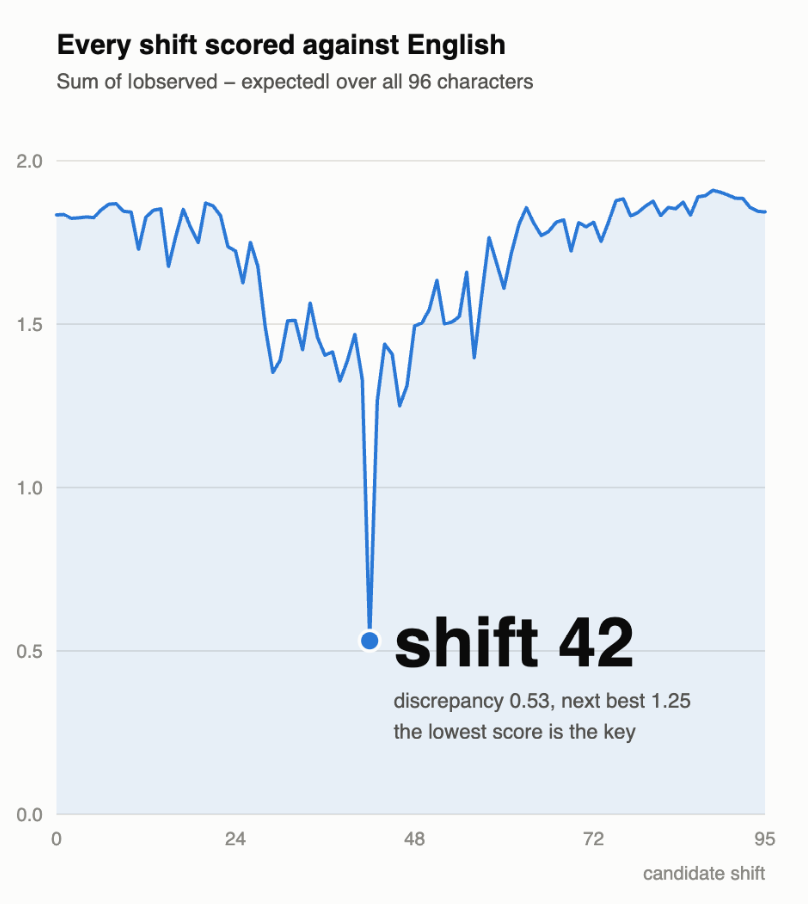
This Caesar shift was done along the ASCII alphabet, so admittedly most of the characters had a probability near 0 and it was far too easy for the key to be decrypted. However, when I made this, I thought it was magic, and I’m including it here because not every project I worked on was significant. Some of them were just significant to me.