BYU Rocketry: Target-Altitude Rocket
As a freshman in BYU's rocket club, I built a rocket designed to fly to a specific target altitude.
- When
- 2022
- Status
- Completed
- Role
- Team member
- With
- BYU Rocketry
Overview
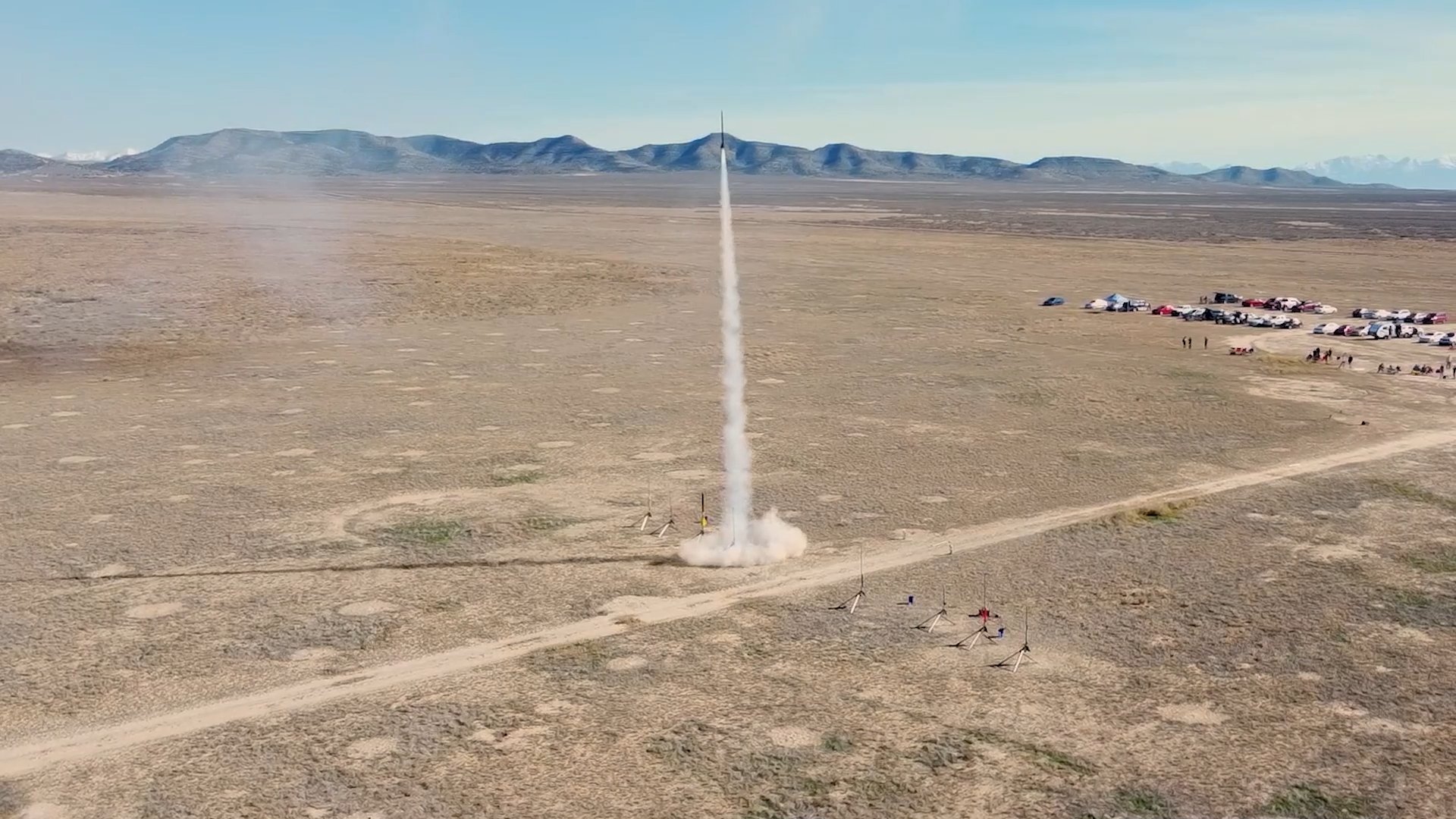
My freshman year of college, I was interested in becoming involved with some of the different engineering clubs on campus. One of the clubs that I investigated and eventually joined was BYU’s rocket club. In their new student competition, teams of two had to build a rocket that could fly to 1,700 ft. We were scored on how well we could hit that target (measured by a sensor embedded in the rocket) by using only design and simulation techniques (so no active control).
Design
I designed the rocket in OpenRocket, an open-source flight simulator that predicts a rocket’s trajectory. This was a great opportunity to try something new and learn a little bit about the aerodynamics of flight. Below is the finished design:
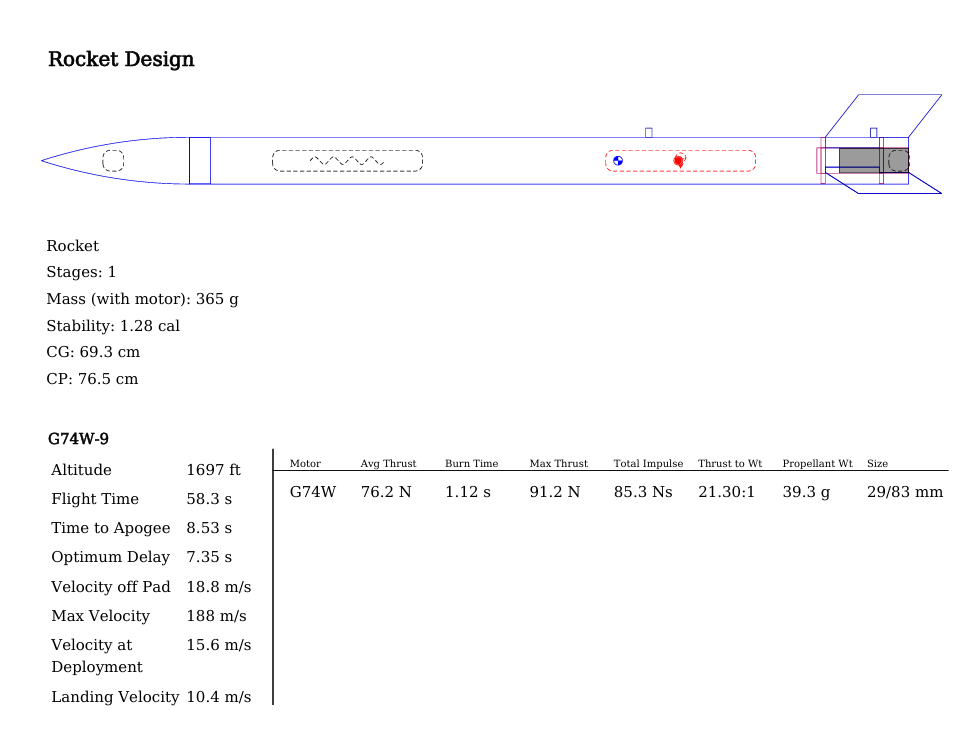 The design and simulated flight. With the motor installed the rocket weighs 365 g, and its center of pressure sits 1.28 calibers behind its center of gravity, so it flies stably. On a G74W-9 motor, the simulation predicts an apogee of 1697 ft, reached 8.5 s after launch, and a peak speed of 188 m/s.
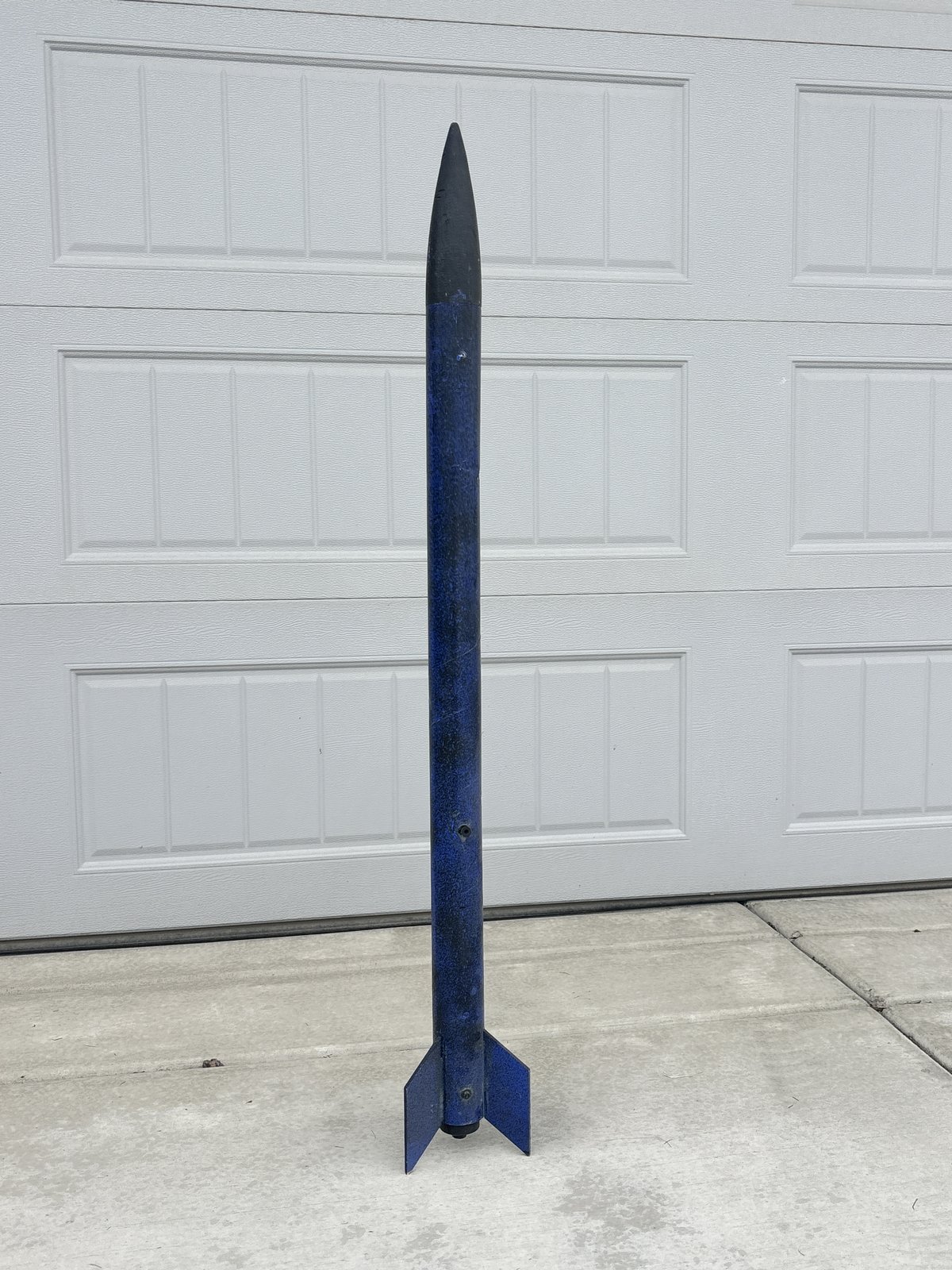
At the competition, we were within 50 ft of the target altitude, which was a success for us. We managed to get third place out of around 40 teams, so we barely managed to place and received a small trophy for our efforts. Overall, this project didn’t really fit into my trajectory as an engineer, but I believe it shows that I’m very capable of learning new things and branching out. Whatever challenge is placed in front of me, I will work to overcome it!